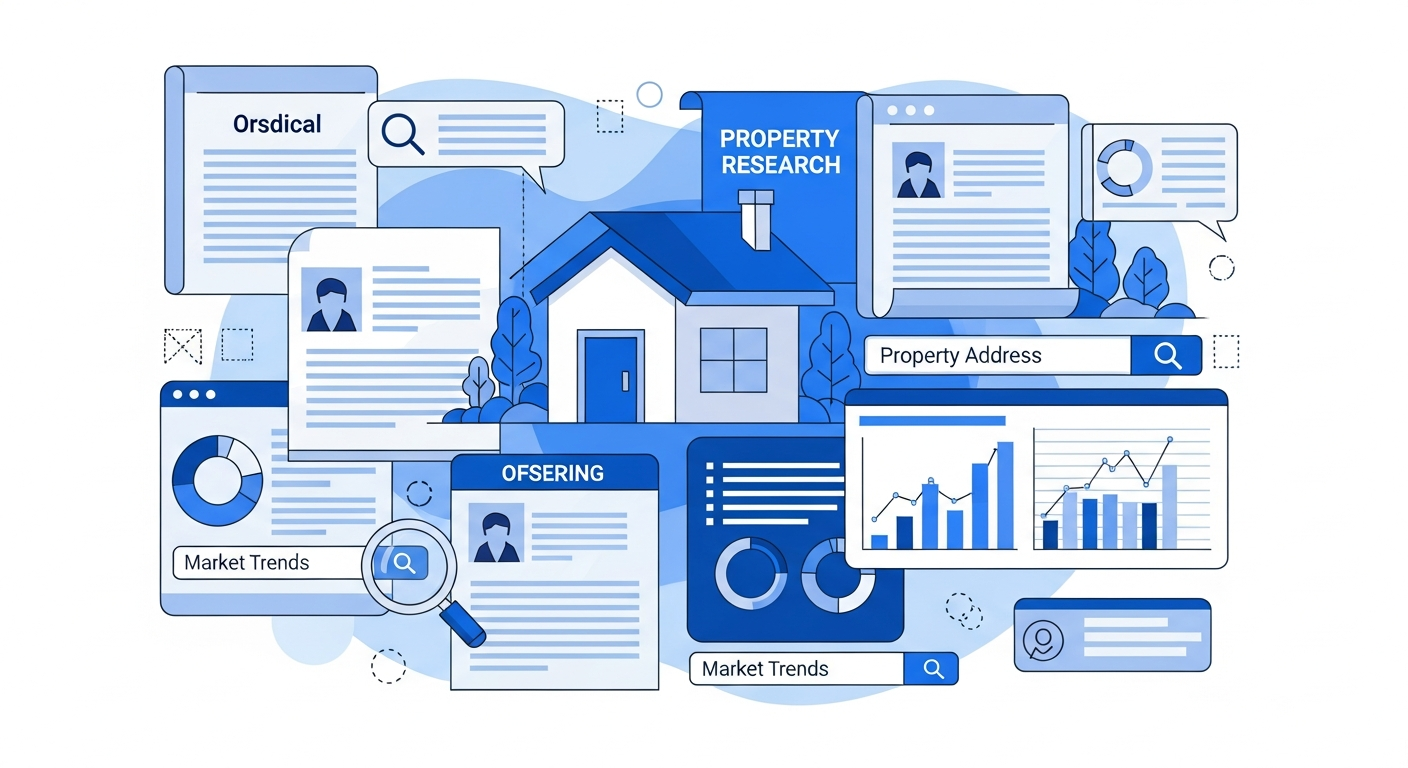
Let me tell you about the house that taught me everything I know about property search.
It was 2019, and I was twenty-eight years old with a decent job, some savings, and the burning desire to stop paying rent to a landlord who hadn't updated anything since the Reagan administration. The real estate market was hot - not quite as insane as it would become during the pandemic, but competitive enough that houses were going under contract within days of listing.
I found what I thought was "the one" during my third weekend of house hunting. A charming two-story colonial on a tree-lined street, listed at just under $300,000. The kitchen had been updated. The backyard was fenced. The neighborhood felt safe and established. My agent seemed enthusiastic. The inspection came back with nothing major.
I made an offer, beat out two other buyers, and closed thirty days later feeling like I'd won the lottery.
Six months later, I was deep in a property dispute with a neighbor who claimed my fence was on his land. A year after that, I discovered the "updated kitchen" had been done without permits by the previous owner's handyman, and the electrical work was dangerous enough that my insurance company threatened to drop my coverage. And two years in, when I tried to refinance, the appraisal came in $40,000 lower than expected because comparable sales in the area had tanked.
Every single one of these problems could have been avoided - or at least anticipated - if I'd known how to properly research a property before buying. Instead, I trusted the listing, trusted my agent, trusted the inspection, and paid the price.
This article is the crash course I wish I'd had. Everything I've learned about property search, distilled into the advice I give to every first-time buyer who asks. Because the time to discover problems is before you sign the papers - not after.
Lesson 1: The Listing Is Marketing, Not Research
Here's something that seems obvious in hindsight but wasn't obvious to me at twenty-eight: the property listing is created by someone who wants to sell you something. Every word is chosen to make the house sound appealing. Every photo is staged and edited. Every "feature" is spun to sound positive.
"Cozy" means small. "Original details" means outdated. "As-is" means there are problems they don't want to fix. "Great potential" means it's a wreck. "Minutes from downtown" could mean forty-five minutes in traffic.
The listing exists to get you in the door. It is not research. It is advertising.
Your job is to verify everything the listing claims and discover everything it doesn't mention. That starts with independent property research. The U.S. Department of Housing and Urban Development provides excellent resources for first-time buyers navigating this process.
Lesson 2: Know the Ownership History
The first thing I do now when researching any property is look up its ownership history. A modern property lookup can tell you:
- Who owns the property now
- How long they've owned it
- How much they paid when they bought it
- How many times the property has changed hands
Why does this matter? Patterns in ownership often reveal problems.
If a property has had four owners in six years, ask yourself why nobody stays. Maybe it's a starter home in a transient neighborhood - that's fine. But maybe there's something wrong with the property that becomes apparent after a few months of living there.
If the current owner is selling after only a year, especially at a loss, that's a red flag. People don't typically sell homes at a loss unless something has forced their hand - and that something might still be present at the property.
The house I bought in 2019? The owners had only lived there for two years. They claimed to be relocating for work. Maybe that was true - but maybe it was also true that they'd discovered all the problems I was about to inherit and decided to get out while they could.
Lesson 3: Research the Neighborhood, Not Just the Property
When I bought my house, I walked around the block once and called it neighborhood research. Big mistake.
Here's what I should have done:
Check property values over time
Are prices in this area rising, falling, or stagnant? Don't just look at the current asking price - look at trends over the past five to ten years. A neighborhood that's been flat or declining isn't suddenly going to appreciate just because you moved in.
Look at ownership patterns
Is this a neighborhood of long-term residents, or are people constantly moving in and out? Long-term ownership usually indicates stability. High turnover might mean problems. Learning who your neighbors are before you buy can save you years of headaches.
Research the neighbors directly
You're going to live next to these people. Wouldn't you like to know if one of them has a history of property disputes, noise complaints, or legal problems? A simple reverse address lookup on the surrounding properties can reveal a lot.
Visit at different times
That quiet street on a Tuesday afternoon might be a nightmare on Saturday night. Drive by at different times - morning commute, evening rush hour, weekend afternoons, late at night. See what the neighborhood is really like.
Lesson 4: Permits and Code Violations Matter
Remember that "updated kitchen" I mentioned? The one that turned out to be an electrical hazard?
If I'd checked the permit history before buying, I would have discovered that no permits had been pulled for that renovation. That's a red flag the size of Texas. Unpermitted work is often substandard work, done by unlicensed contractors cutting corners to save money.
Most counties have permit records available online or at the planning office. Before buying any house, check:
- What permits have been pulled for the property?
- Were those permits closed out (meaning the work was inspected and approved)?
- Does the current condition of the house match what was permitted?
If the kitchen was renovated but there's no permit for electrical work, plumbing work, or structural changes - be very, very careful.
Lesson 5: Property Lines Are Not Obvious
I assumed the fence in my backyard was on my property. It wasn't. It was eighteen inches onto my neighbor's land - a mistake made by a previous owner that I inherited.
The neighbor hadn't said anything when the fence went up - they were friendly with the previous owner. But when I moved in, relations cooled. Eventually, the neighbor decided he wanted his eighteen inches back. I ended up paying $3,000 to have the fence moved, plus legal fees for the property line dispute, plus the headache and stress of fighting with my neighbor for eight months.
Before you buy, get a survey. Don't assume the fence, the hedge, or "where they've always mowed" represents the actual property line. Surveys cost a few hundred dollars. Property disputes cost thousands.
Lesson 6: Talk to the Neighbors
Nobody told me about the property line issue before I bought. Nobody told me about the parking problems on the street, the flooding in the basement during heavy rains, or the nightmare tenant who used to live next door and might be back someday.
The neighbors knew all of this. I just never asked.
Before making an offer on any house, knock on a few doors. Introduce yourself. Say you're considering the property and wondering what the neighborhood is like. Most people will give you an honest assessment - especially if there are problems they've been dealing with.
Daniel Kim wrote an excellent piece about how neighbor research saved his home purchase - a cautionary tale everyone should read before buying.
Lesson 7: Never Rush
The real estate market creates artificial urgency. "This house won't last." "You need to make an offer today." "There are other interested buyers."
Sometimes that's true. But often, it's pressure designed to prevent you from doing the research that might reveal problems.
If you lose a house because you took an extra day to research it properly, that's not a loss - that's a bullet dodged. The right house, properly researched, will come along. The wrong house, bought in a rush, will haunt you for years.
What I Do Now
These days, when I look at any property - whether I'm considering buying or just curious - I follow a checklist:
- Ownership history: Who has owned it, for how long, and at what prices?
- Permit history: What work has been done, and was it properly permitted?
- Neighborhood research: What are the trends in the area? Who lives nearby?
- Property lines: Where exactly does the property start and end?
- Physical visits: What's it like at different times of day and week?
- Neighbor conversations: What do the people who live there say about the area?
By the time I walk through the front door, I already know more about the property than the agent expects. I'm not relying on the listing's story - I'm verifying it against the records.
It takes more time. It takes more effort. But it's nothing compared to the time, money, and stress I spent fixing the problems I could have discovered upfront.